Blog
LLM Optimization for B2B SaaS: What It Is and Why It Differs from SEO
LLM search optimization targets AI citation in ChatGPT, Perplexity and Google AI Overviews. Learn how it differs from SEO and what B2B SaaS teams should do first.
The structural, technical, and content factors that determine whether AI assistants cite a B2B SaaS brand - grounded in engine documentation.
LLM search optimization targets AI citation in ChatGPT, Perplexity and Google AI Overviews. Learn how it differs from SEO and what B2B SaaS teams should do first.

Answer engine optimization vs traditional SEO for B2B SaaS: shared technical foundations, where they diverge on content structure and measurement, and what the evidence shows.
Request a quote and our experts will contact you within 24 hours with tailored solutions and pricing.
Last updated: Oct 14, 2026
By the AEO for B2B SaaS Editorial Team
Answer engine optimization (AEO) for B2B SaaS is the practice of making pages technically readable by AI crawlers, writing content that places a direct answer first, and building the factual depth that ChatGPT, Perplexity, Gemini, Claude, and Google AI Overviews can lift and cite.
The scenario is common: a CEO queries their product category in ChatGPT and sees a shortlist of four vendors. The company is not one of them. The question that follows is always the same: where do we start? The answer is not more content targeting keywords. It is a sequence of structural, technical, and content changes that make pages legible and citable by AI assistants, grounded in what each major engine has documented publicly. This guide covers that sequence in order.
Key Takeaways
- AI assistants cannot cite a B2B SaaS page they cannot crawl. Crawler access and JavaScript rendering are the first checks, not the last.
- Writing each page section with a direct answer in the opening sentence is the single highest-leverage content change for citation.
- Structured data - FAQPage, HowTo, Article schemas - is documented by Google as a factor in AI Overview source selection.
- Ahrefs measured a 58% lower average click-through rate (CTR) for top-ranking pages on queries with an AI Overview, across 300,000 keywords (December 2023 vs December 2025), making citation visibility important even when clicks fall.
- A fixed monthly check of 20 or more category questions across five engines is the minimum viable measurement baseline.
Answer engine optimization (AEO) for B2B SaaS is the practice of making pages technically readable by AI crawlers, writing content that places a direct answer first, and building the factual depth that engines can lift and cite. ChatGPT, Perplexity, Gemini, Claude, and Google AI Overviews share the same core prerequisites. Most B2B SaaS sites fail on at least one before any other factor matters.
AEO overlaps with search engine optimization (SEO) in technical foundations, but differs in what it optimises for: not a ranked link, but a cited passage. The term generative engine optimization (GEO) is used by some researchers for the same discipline. Both point to the same practical question: when a buyer asks a large language model (LLM) to name vendors in a category, why does the engine pick some sources and not others?
The answer, across engines, is consistent. Pages that are crawlable, answer-first, and factually specific get cited. Pages that are technically opaque, answer-last, or written as marketing prose do not.

AI assistants need three things from a B2B SaaS page before citation is possible: the crawler must be allowed access in robots.txt, the content must be readable without JavaScript execution, and the page must contain a direct answer to a buyer question in plain HTML. Without crawler access, no other factor matters. Without a readable answer, there is nothing for the engine to lift.
These are not guesses. Each major engine publishes documentation on how it accesses and selects web content. The table below maps the three prerequisites against the most common ways B2B SaaS sites fail them.
| Prerequisite | What engines need | Common B2B SaaS failure |
|---|---|---|
| Crawler access | AI crawler agents permitted in robots.txt | Default bot-protection rules blocking all non-Google crawlers |
| Content in raw HTML | Answer visible without JavaScript execution | Page content rendered entirely by a JavaScript framework |
| Direct answer present | A specific response to a buyer question in the opening text | Long introductions before the answer, or no direct answer at all |
This table is the starting audit. Before any content or structured-data work begins, confirm each row is clear. A page that fails on crawler access earns no benefit from perfect content structure.
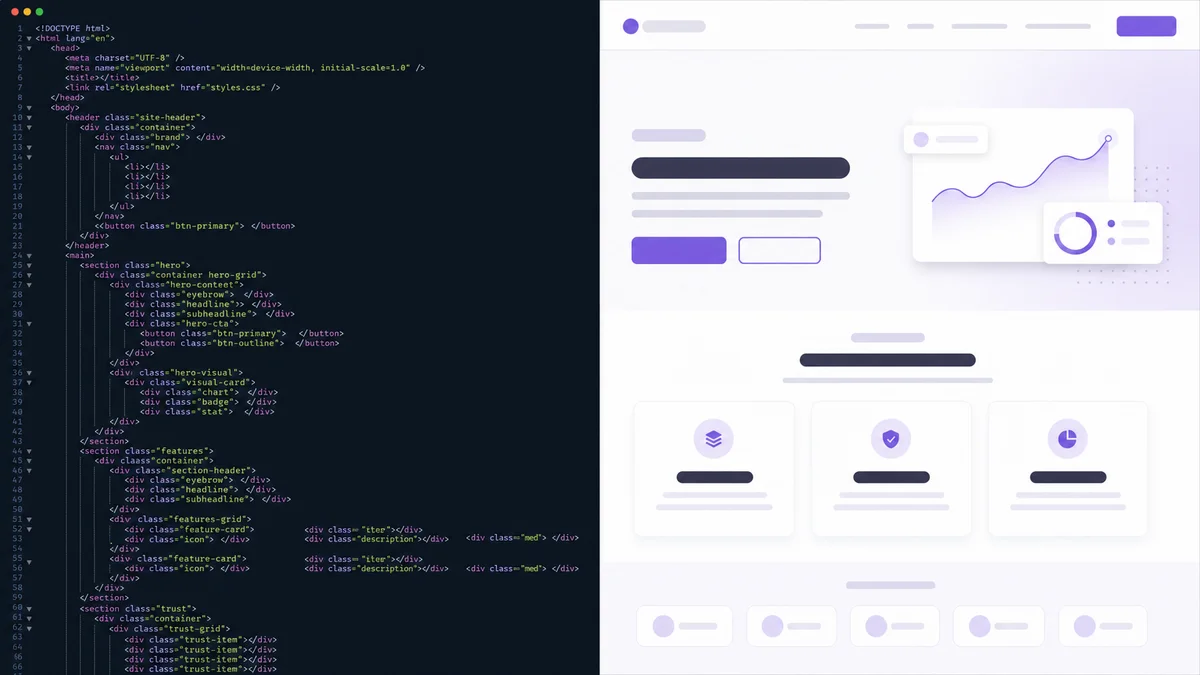
AI crawlers cannot cite a B2B SaaS page they cannot read. The two most common blockers are JavaScript-rendered content - where the answer exists only after a script runs - and robots.txt rules that block AI crawler agents by name or by default. Both can be resolved without a site rebuild, and both should be confirmed before any content work begins.
robots.txt is a plain-text file placed at a site's root that instructs crawlers - including AI crawlers - which pages or sections they are permitted to access. Many B2B SaaS sites have rules in robots.txt written for traditional SEO purposes that inadvertently block AI crawler agents. Common agent names include GPTBot (OpenAI), ClaudeBot (Anthropic), PerplexityBot, and Google-Extended. Blocking these agents removes citation opportunity without any corresponding benefit for pages already publicly indexed.
The fix is intentional: review robots.txt, identify the agent names used by each major engine, and allow them explicitly where the content is public. For the category pages, integration pages, comparison pages, and guides where citation matters most, access should be open.
JavaScript rendering is the second common blocker. AI crawlers typically read the raw HTML served by the server, not the version of the page assembled by a JavaScript framework in the browser. If a B2B SaaS page loads its main content after a script runs, the crawler sees an empty shell.
The diagnostic is straightforward: view the page source (not the browser's rendered view) and confirm the answer to the page's primary question is present in that source. If it is not, the content needs to be server-side rendered, or the answer block needs to be placed in static HTML.
llms.txt is a proposed convention - not a standard adopted by any major engine as of October 2026-that signals to AI crawlers which content is intended for ingestion. It is worth adding, but it does not substitute for readable HTML.
AI assistants cite B2B SaaS pages that place a direct, specific answer within the first paragraph of a section, before any supporting detail, qualification, or navigation. Category definition questions, comparison and alternatives questions, and integration and pricing questions are the highest-value targets. Writing each section answer-first is the single highest-leverage content change for citation.
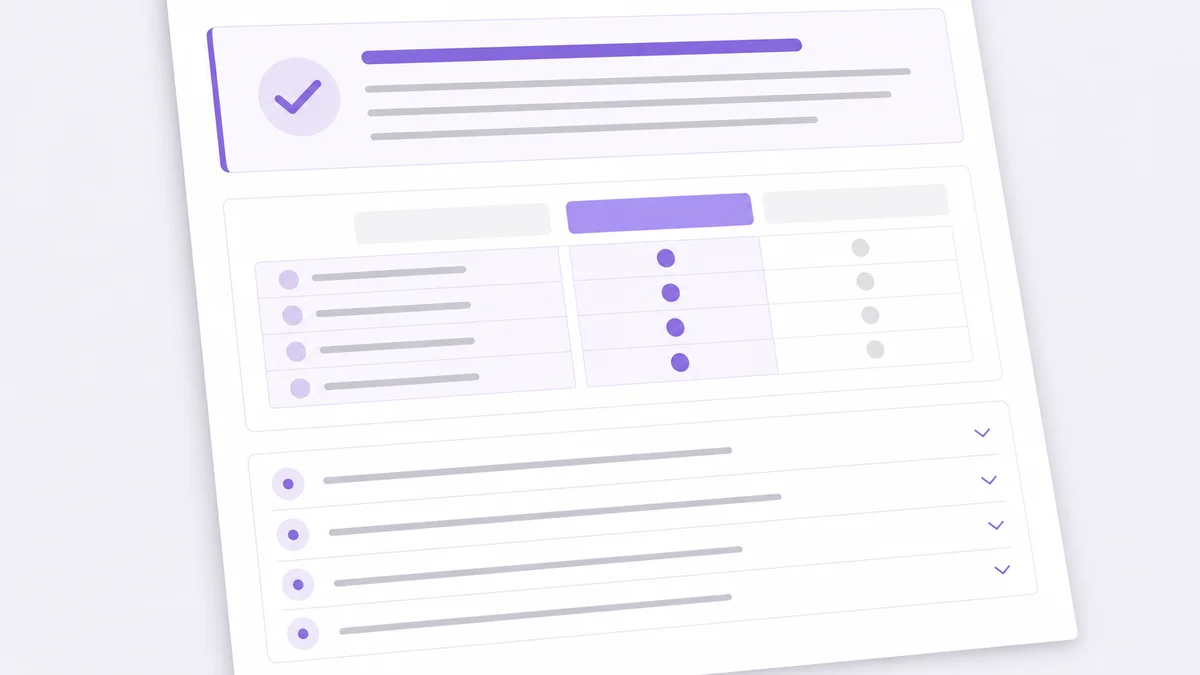
An answer-first page does not begin with company history, a market statement, or a teaser for what is coming later. It begins with the answer. For a page targeting "What does [Product] integrate with?", the opening sentence names the integrations. For a comparison page, the opening sentence states the verdict.
| Page type | Answer-last opening (not citable) | Answer-first opening (citable) |
|---|---|---|
| Category definition | "The world of project management software is complex and evolving..." | "[Product] is project management software for engineering teams that connects tasks to code commits." |
| Comparison page | "Choosing between [A] and [B] depends on many factors..." | "[A] is better for teams over 50 people; [B] costs less and takes less time to configure." |
| Integration page | "Integrations are a key part of any modern SaaS stack..." | "[Product] connects natively to Salesforce, HubSpot, Slack, and Jira via a REST API." |
| Pricing page | "Our pricing is designed to scale with your business..." | "[Product] starts at $X per seat per month. Enterprise pricing requires a call." |
Every section of a page - not just the introduction - should follow this structure. AI assistants do not always lift the opening paragraph. They lift the passage that most directly answers the query being processed.
Enumerable content - comparisons, feature lists, pricing tiers, integration directories - belongs in tables or lists, not buried in paragraphs. FAQ sections with direct answers are among the most-cited page elements across AI engines, because the question-and-answer format matches the query-and-response structure of the engines themselves.
Structured data - schema markup types including FAQPage, HowTo, Article, and Product - helps AI engines process and categorise B2B SaaS page content. Google has published documentation confirming that structured data plays a role in how AI Overviews select and display content. Schema must match what is visible on the page exactly; a mismatch between markup and visible content is detectable by engines.
FAQPage schema is a schema.org markup type that signals to search engines and AI crawlers that a page contains structured question-and-answer content. It is among the most directly applicable types for B2B SaaS, because buyer questions map naturally to FAQ format and because AI assistants frequently lift FAQ content in their answers.
The most important rule for structured data: schema must describe what is actually on the page. Marking up a FAQ that does not appear in the visible HTML, or using HowTo markup on a page with no numbered steps, creates a mismatch engines can detect. Schema is a machine-readable description of visible content, not a separate signal layer.
A practical implementation order for B2B SaaS pages:
AI assistants select B2B SaaS sources that contain specific, citable facts: named entities, defined terms, concrete figures, direct comparisons, and clear category positions. Pages written as marketing brochures - general value propositions, no specific claims - give engines nothing distinctive to lift. Every page intended to earn a citation should contain at least one table, one definition, and one specific claim true only of that product.

A citable page answers a question that a buyer would actually ask an AI assistant. The most common examples in B2B SaaS:
Each of these should have a dedicated page or a dedicated section with a direct answer. The answer should name the product in full, state the specific response, and include at least one concrete detail - a number, a named integration, a named competitor, a price range - that the engine can reproduce in its response.
Pages with original data - case study results, benchmark figures, survey outcomes - are cited more often because they are the only source for that information. Where a B2B SaaS company has first-party results, those numbers belong on public pages with clear attribution, not gated behind a form. A gated page is not crawlable and not citable.
Measuring AI visibility for a B2B SaaS brand means selecting a fixed set of 20 or more category and buyer questions and checking each across five engines every month - recording whether the brand is cited, how the product is described, and which competitors appear. Without a fixed question set and a regular cadence, there is no baseline and no way to detect change.
AEO for B2B SaaS proposes: A monthly check of 20 or more category questions across five engines - ChatGPT, Perplexity, Google AI Overviews, Gemini, and Microsoft Copilot - recording citation presence, description accuracy, and competitor co-appearances, as the minimum viable AI visibility baseline.
The question set should start with the queries buyers actually use: the category definition question, the top comparison questions, the integration questions, and the pricing question. The output being measured is different from traditional keyword research: not rank position, but citation presence and description accuracy.
A practical starting structure:
For each result, record: cited or not cited, how the product is described, whether the description is accurate, and which competitors appear in the same answer.
AI referral traffic arrives from domains including chatgpt.com, perplexity.ai, gemini.google.com, and bing.com (for Copilot-sourced visits). Setting up a segment or filter in analytics that captures these referrers gives a secondary measurement alongside the manual citation check. Citation presence and referral traffic together give a more complete picture than either signal alone.
No published source measures a causal relationship between specific page changes and citation outcomes, so no timeline or citation guarantee is defensible. The decision to act is a business risk question: a B2B SaaS brand absent from AI-generated shortlists is absent from a discovery channel buyers already use. The evidence on traffic impact points in two directions and is still forming.
| Source | Finding | Type | Date |
|---|---|---|---|
| Ahrefs (300,000 keywords) | 58% lower average CTR for top-ranking pages on queries with an AI Overview | Measured | December 2023 vs December 2025 (Ahrefs, February 2026) |
| Seer Interactive (901M impressions) | CTR on results with an AI Overview rebounded 85% in the first two months of 2026 | Measured | April 2026 |
| Seer Interactive (901M impressions) | Informational results without an AI Overview rose from 2.93% to 3.97% CTR across 901 million impressions in 2025 | Measured | April 2026 |
| Gartner | Traditional search engine volume will drop 25% by 2026 | Predicted | February 2024 |
The measured signals point in different directions, and the honest position is that the data is still forming. What is not uncertain: a B2B SaaS brand absent from AI-generated shortlists is absent from a discovery channel that buyers are already using. The question is not whether to expect a guaranteed citation - it is whether being invisible in AI answers is an acceptable outcome.
B2B SaaS companies whose entire site sits behind a login wall have no publicly crawlable pages for AI assistants to index - the steps in this guide presuppose at least some public-facing content. The guide also assumes a site that is already publicly indexed. If content is entirely JavaScript-rendered with no server-side fallback, or no pages address buyer questions at all, those are prerequisites to resolve before the steps here apply.
This guide is also not for teams seeking shortcuts. No tactic forces an AI assistant to cite a page. Any approach that embeds instructions to AI models inside page content is explicitly not recommended here: citation is earned by answer quality and technical accessibility, not manipulation.
Finally, this guide is not for B2C, e-commerce, or local businesses. The buyer behavior, question types, and engine citation patterns differ enough that these recommendations should not be applied without significant adaptation.
Answer engine optimization (AEO) is the practice of structuring a B2B SaaS site and its content so that AI assistants - ChatGPT, Perplexity, Gemini, Claude, Microsoft Copilot - and Google's AI features choose to cite it when a buyer asks a category or vendor question. It overlaps with search engine optimization (SEO) in technical foundations but differs in how pages are written and measured.
ChatGPT's citation behavior for web-browsing queries is documented in OpenAI's published guidance. The engine selects sources based on crawlability, page quality, and answer relevance. Claims about ChatGPT's internal ranking logic that are not in OpenAI's documentation should be treated as observation, not confirmed fact.
The evidence points in two directions. Ahrefs measured a 58% lower average click-through rate for top-ranking pages on queries with an AI Overview, across 300,000 keywords (December 2023 vs December 2025). Seer Interactive found those click-through rates rebounded 85% in the first two months of 2026, across 901 million impressions. Both figures carry stated samples; no single conclusion is settled.
A practical baseline involves selecting 20 or more category and buyer questions, checking each across five engines monthly, and recording whether the site is cited, how the product is described, and which competitors appear alongside it. AI referral traffic can be separated in analytics by filtering for referrers including chatgpt.com, perplexity.ai, and similar domains.
Blocking AI crawlers in robots.txt prevents engines from reading and potentially citing a page. If a page is already public and indexed by search engines, blocking AI crawlers reduces citation opportunity without a corresponding benefit. Check robots.txt intentionally for named AI crawler agents - GPTBot, ClaudeBot, PerplexityBot, Google-Extended - and allow them where content is already public.
Search engine optimization (SEO) targets ranked links in traditional search results. Answer engine optimization (AEO) targets citations in AI-generated answers. Generative engine optimization (GEO) is an overlapping term used by some researchers for the same discipline. The three share technical foundations but differ in how pages are written, what counts as a win, and how success is measured.
Getting a B2B SaaS brand cited by AI assistants is not a single change - it is a sequence. Start with technical access: confirm AI crawlers are allowed and content is in raw HTML. Fix content structure so every section opens with a direct answer to a buyer question. Add structured data that matches what is visible. Build pages with specific, citable facts. Then measure: a fixed set of 20 or more category questions, checked across five engines, every month.
No change guarantees a citation. What is certain is that a page an AI assistant cannot read will never be cited, and a page with no direct answer gives the engine nothing to lift. The starting point is not content volume - it is answer quality and technical accessibility.
Be the answer, not the tenth blue link.
Meet with an expert. A free consultation. Bring the questions buyers ask about your category and brainstorm how to get cited. Book a session at aeoforb2bsaas.com