Request a quote and our experts will contact you within 24 hours with tailored solutions and pricing.
How Does a B2B SaaS Company Grow Its Visibility in AI Search Results?
By AEO for B2B SaaS Editorial Team | Last updated: November 4, 2026
A B2B SaaS company grows its visibility in AI search by making its pages easy for answer engines to read, quote and trust, then measuring how often AI assistants cite it for buyer questions. That practice is called answer engine optimization (AEO): structuring a site and its content so AI assistants and AI search features cite it when a buyer asks a category or vendor question. Many teams see the symptom first. ChatGPT lists four vendors in the category, and theirs is not one of them. This guide covers what the measured evidence says, which page changes come first, and how to track progress. For the basics, see what AEO means.
Key Takeaways
B2B SaaS buyers already use AI assistants for research: G2 reports 71% of B2B software buyers rely on AI chatbots for software research (G2, 2026).
Enterprise B2B brands are exposed to AI answers but rarely cited: AI Overviews appear in nearly 50% of results pages where they rank (Walker Sands, 2026).
Google's own guidance says SEO fundamentals still apply to AI features, so crawler access and readable pages come first.
AI visibility for a B2B SaaS company is measured with a fixed buyer-question set checked monthly, not with rankings alone.
No source documents a guaranteed citation or a fixed timeline, and AI visibility does not replace reviews or demos.
How does a B2B SaaS company grow its visibility in AI search results?
A B2B SaaS company grows its visibility in AI search by keeping pages readable to crawlers, opening each page with a direct answer to a buyer question, backing claims with named figures, and checking citations monthly. Google's documentation states "The way Google Search finds and processes your pages remains the core of how our AI systems access your data." (Google for Developers, 2026)
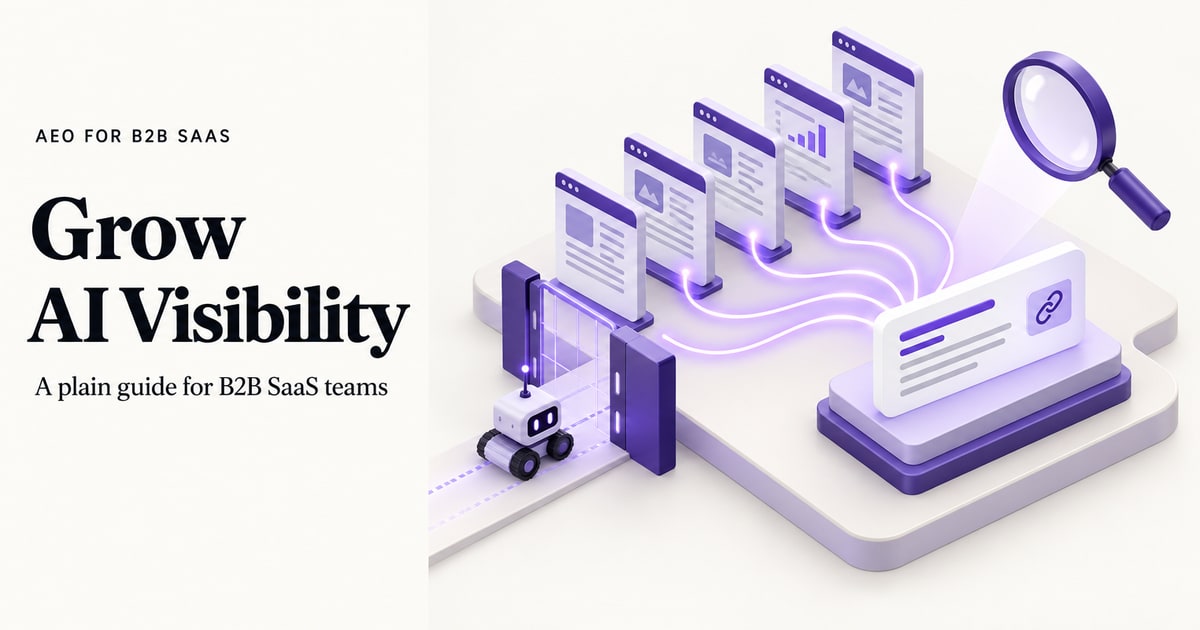
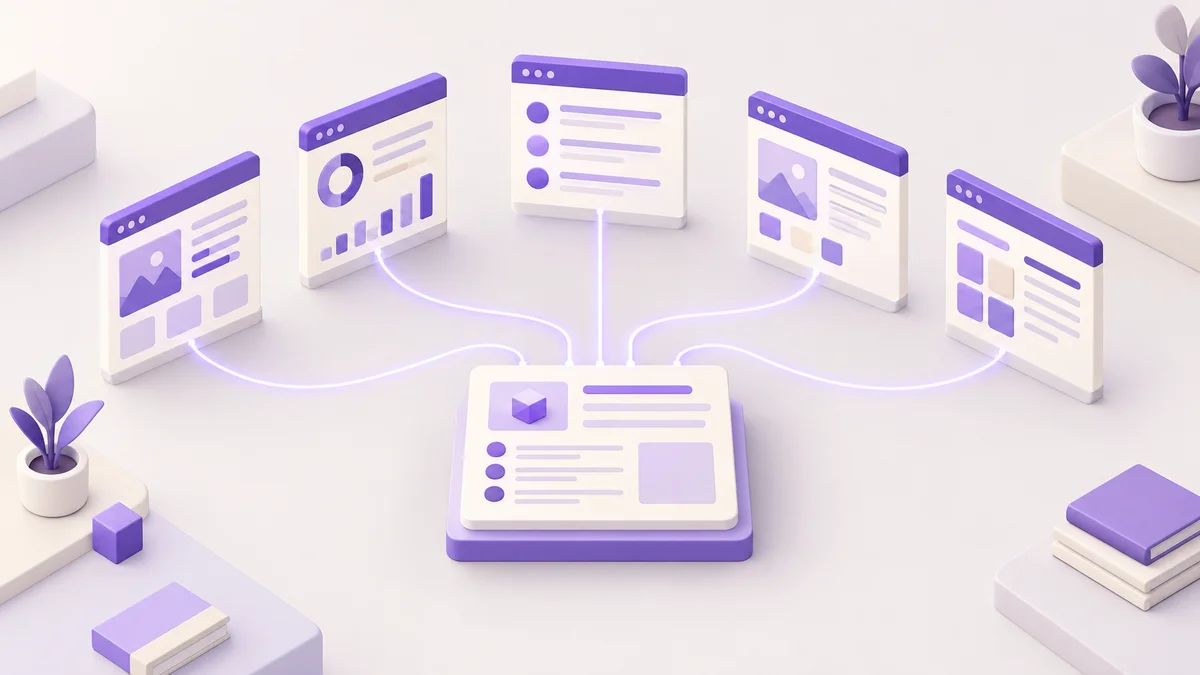
Five stacked web page panels connected by glowing lines to a single answer card with a link chip
AEO builds on search engine optimization (SEO) foundations rather than replacing them. The work runs in a fixed order: crawler access first, then answer-first copy, then evidence, then matched structured data, then monthly measurement. The cluster guide on getting a B2B SaaS brand cited by AI assistants covers the wider plan.
Why does AI search visibility matter to B2B SaaS buyers?
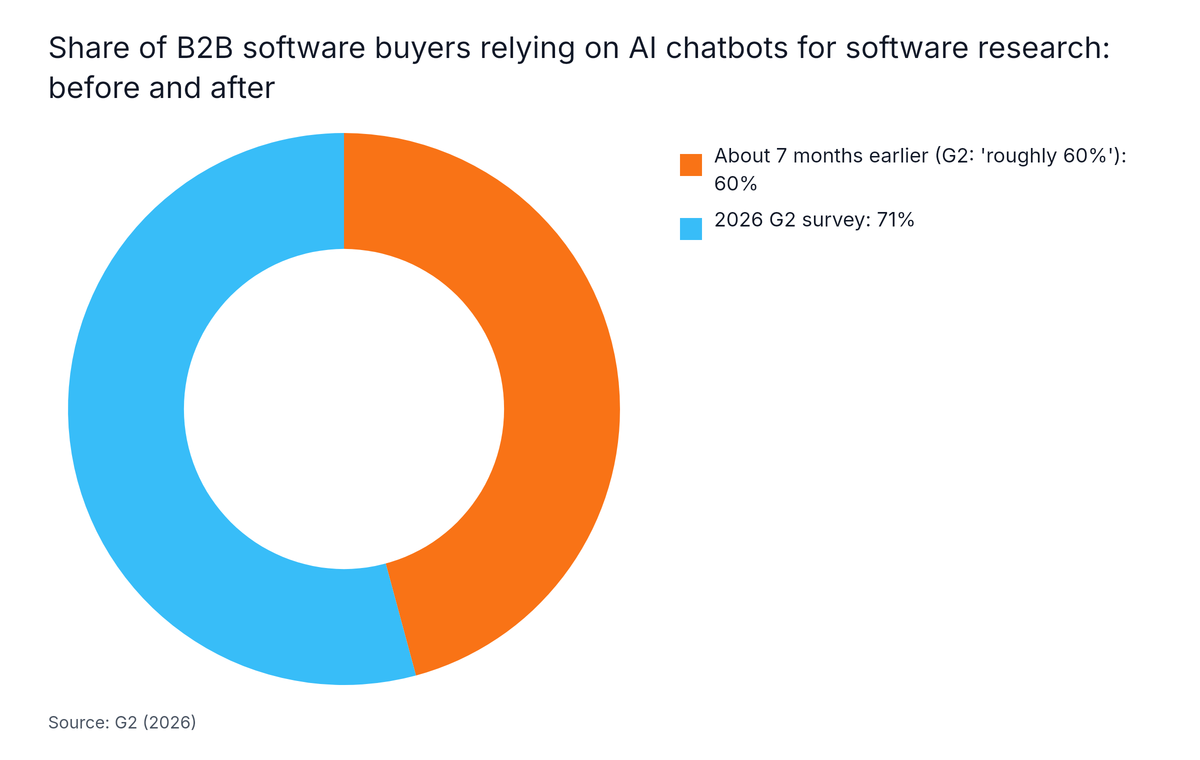
AI search visibility matters to B2B SaaS because buyers now begin vendor research inside AI assistants. G2's 2026 AI Search Insight Report found that 71% of B2B software buyers rely on AI chatbots for software research (G2, 2026), and Forrester reports that 94% of business buyers use AI in buying (Forrester, 2026).
Donut chart: Share of B2B software buyers relying on AI chatbots for software research: before and after. Highest: 2026 G2 survey at 71%.
G2 put reliance at roughly 60% about seven months before its 2026 survey, so the share rose from about 60% to 71% in a short span (G2, 2026). The survey covered over 1,000 B2B software buyers and decision-makers. It is vendor research, and G2 sells review and visibility products, so treat the exact numbers as directional.
Signal
Figure
Source
Type
Buyers relying on AI chatbots for software research
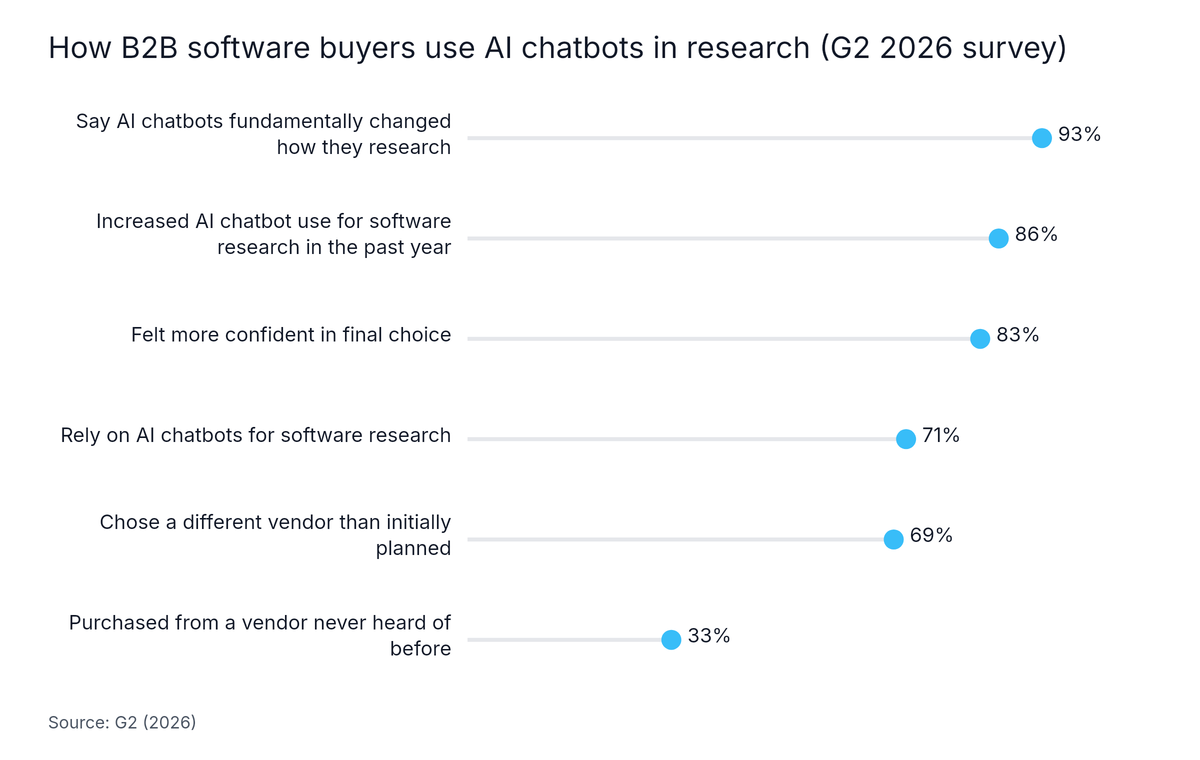
Lollipop chart: How B2B software buyers use AI chatbots in research (G2 2026 survey). Highest: Say AI chatbots fundamentally changed how they research at 93%.
The same G2 poll found that 93% of buyers said AI chatbots fundamentally changed how they research, and 33% bought from a vendor they had never heard of before (G2, 2026). A chatbot that changes the shortlist is the figure a CEO tends to notice. Being absent from the answer means being absent from the shortlist.
Where do B2B SaaS brands stand in AI search today?
Most enterprise B2B brands are rarely cited in AI answers today. Per Walker Sands, as reported by Valasys in June 2026, the median enterprise B2B brand is cited in about 3% of relevant Google AI Overviews, despite ranking organically for about 9,700 queries (Valasys, 2026).
A magnifying glass over a row of vendor cards where only a few cards carry citation badges
The Walker Sands H1 2026 benchmark covers more than 45 million keywords across 828 enterprise B2B companies in 14 industries. It found that AI Overviews appear in nearly 50% of search results pages where those brands rank (Walker Sands, 2026). A press summary adds that 4.6% of the companies were not cited at all (MarTech Cube, 2026).
Smaller B2B SaaS companies have a thinner evidence base. A vendor-run test by AnswerManiac covered 100 B2B SaaS companies on 42 buyer-intent queries in ChatGPT and Perplexity (April 28 to May 12, 2026). It found 53 of the 100 received zero citations (AnswerManiac, 2026). The sample is small, so read it as directional.
What should a B2B SaaS team change on its pages first?
A B2B SaaS team should change five things first, in order: let AI crawlers read key pages without JavaScript, open each section with a direct answer, put comparisons in tables, match structured data to visible text, and publish dated, sampled figures. Google's guidance says "The best practices for SEO remain relevant for AI features in Google Search (such as AI Overviews and AI Mode)." (Google for Developers, 2025)
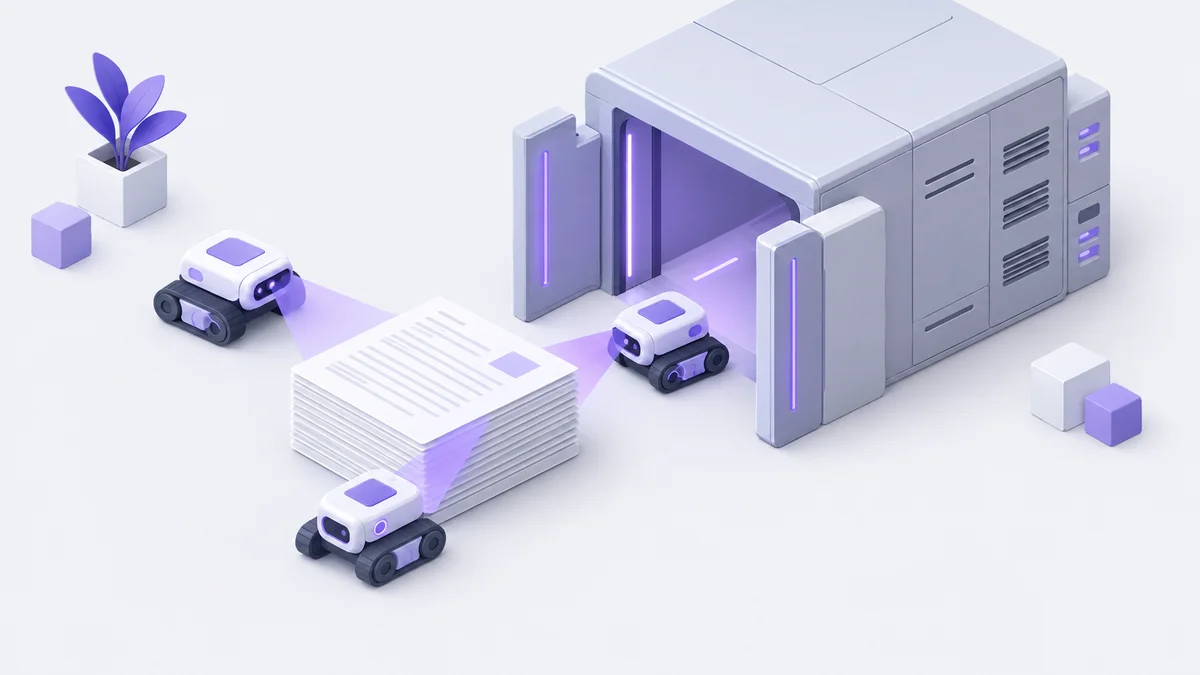
An isometric web server with an open gate letting small crawler robots read a stack of pages
What does each change involve?
Order
Change
What to do
Why it helps
1
Crawler access
Render key pages in raw HTML; review robots.txt and bot-protection rules
An engine that cannot read a page cannot cite it
2
Answer-first copy
Open each section with a direct answer to its heading
Gives engines a passage that stands alone
3
Tables and FAQs
Put comparisons, pricing and integration facts in tables
Turns prose into liftable, checkable facts
4
Structured data
Add markup that matches what is visible
Describes the page the way search systems expect
5
Original numbers
Publish dated, sampled figures
Specific claims are easier to trust and quote
Structured data is markup that labels page content in a machine-readable way, and it should always match what a visitor sees. llms.txt is a proposed convention that signals which content is meant for AI crawlers. No major engine has documented that it acts on the file, so treat it as optional, after the basics. Google's May 2026 guide for generative AI features also says SEO fundamentals remain the foundation (Google Search Central, 2026).
Generative engine optimization (GEO) is an overlapping term some researchers use for the same discipline, and large language model (LLM) optimization is another. For a side-by-side view, see AEO vs SEO for B2B SaaS and LLM optimization for B2B SaaS.
Why do reviews, demos and proof still matter?
Buyers check what AI tells them. TrustRadius's 2026 B2B Buying Disconnect Report found that 94% of buyers who used AI say they fact-check AI responses at least some of the time (MarketScale, 2026). Forrester's survey, reported by BIIA, found 28% of procurement respondents felt less confident because of inaccurate AI output, against 19% of all buyers (BIIA, 2026).
Forrester puts it plainly: "Buyers lean on AI for speed and breadth of insight, yet they increasingly validate its output against trusted external sources." (Forrester, 2026) Case studies, reviews and accurate comparison pages serve both the engine and the human check.
How do you measure visibility in AI search?
A B2B SaaS team measures AI visibility by fixing a list of buyer questions, checking each across the main answer engines monthly, and recording whether the brand is cited, how it is described and which competitors appear. Clicks alone miss this: Pew Research Center found users clicked a traditional result in 8% of visits with an AI summary, against 15% without (Pew Research Center, 2025).
A calendar grid with checklist tiles and a small bar chart marking a monthly measurement routine
A proposed baseline is 20 or more category questions checked across five engines each month. Citation rate is the share of tracked buyer questions for which an answer engine names or links the brand. It is the core number, because rankings alone cannot show it.
What to track
How
Cadence
Citation rate per engine
Run the fixed question set in each engine; log cited or not
Monthly
Accuracy of brand description
Compare the engine's wording with the product facts
Monthly
Competitors named alongside
Record every vendor in each answer
Monthly
AI referral traffic
Filter analytics referrers such as chatgpt.com and perplexity.ai
Weekly or monthly
Google generative AI reporting
Check Search Console's Generative AI performance report where available
Monthly
Google began rolling out insights on how pages appear in generative AI features in late August 2026, and the date is approximate (Google, 2026). Keep the question set fixed for months. Changing it makes month-to-month comparison meaningless. Tool choices are covered in a comparison of AEO tools and platforms.
Do AI Overviews reduce clicks, and does ranking guarantee a citation?
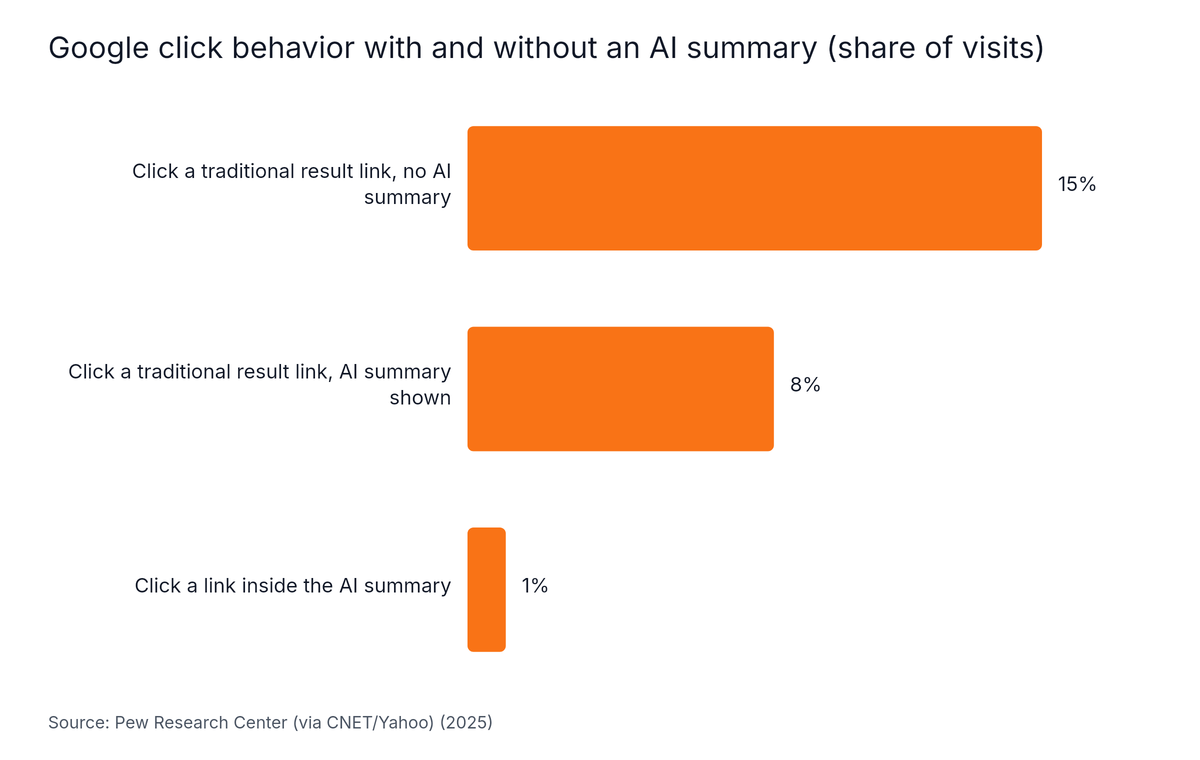
AI Overviews reduce clicks on average, but the size of the drop varies by study. Pew Research Center measured a 15% click rate on traditional results without an AI summary, and found that "Users who encountered an AI summary clicked on a traditional search result link in 8% of all visits." (Pew Research Center, 2025)
Horizontal Bar chart: Google click behavior with and without an AI summary (share of visits). Highest: Click a traditional result link, no AI summary at 15%.
Pew analysed March 2025 browsing data from 900 US adults. Only 1% of searches ended in a click on a link inside the summary, and Google disputed the methodology (CNET via Yahoo, 2025). Click-through rate (CTR) is the share of impressions or visits that end in a click. The evidence points in two directions, so each figure is labelled.
Figure
Type
Sample and date
15% vs 8% click rate without and with an AI summary
58% lower average CTR for the top-ranking page with an AI Overview
Measured
Ahrefs (2026), 300,000 keywords, December 2023 vs December 2025
CTR on AI Overview results rebounded 85%
Measured
Seer Interactive (2026), first two months of 2026
Informational CTR without an AI Overview rose from 2.93% to 3.97%
Measured
Seer Interactive (2026), 901 million impressions, 2025
Evidence on both sides: In AEO for B2B SaaS's evidence pack, Ahrefs (published February 2026) reports a 58% lower average CTR for the top-ranking page when an AI Overview was present, across 300,000 keywords. Seer Interactive (2026) then reported that CTR on AI Overview results rebounded 85% in the first two months of 2026. It also found informational results without one rose from 2.93% to 3.97% across 901 million impressions in 2025. Both are third-party studies.
Does ranking in Google guarantee an AI citation?
No. The Walker Sands benchmark shows that strong rankings do not translate into AI citations: brands that rank for thousands of queries are still rarely cited. Page one still matters for access, but it is not enough alone. The practical response is to count citations and AI referrals next to clicks, and to write pages that earn the citation when the click does not come. A fuller walk-through sits in the guide on getting cited by AI search engines and Google AI Overviews.
Who is AEO for B2B SaaS not for?
Answer engine optimization (AEO) for B2B SaaS has real limits: no engine publishes a citation guarantee, no sourced timeline exists, and AI visibility does not replace reviews, demos or proof. G2 states "AI is not replacing the buying process." (G2, 2026) Teams wanting a fixed citation date should look elsewhere.
Three caveats apply:
Evidence is uneven. Several figures here come from vendor or agency research, and some are secondary reports. A 2026 academic survey of GEO research found the widely quoted "40% visibility" gain is a relative maximum under specific settings (arXiv, 2026).
Segments differ. The strongest benchmark covers enterprise B2B. Mid-market SaaS data is thinner.
Not a replacement for other channels. Buyers still verify and close through demos and reviews.
Frequently Asked Questions
How do you measure visibility in AI assistants?
Measure AI assistant visibility by fixing a list of buyer questions, checking each across the main answer engines every month, and recording whether the brand is cited, how it is described and which competitors appear. Separate AI referral traffic in analytics by filtering referrers such as chatgpt.com and perplexity.ai.
Does llms.txt matter for AI search visibility?
llms.txt is a proposed convention, not a standard adopted by any major engine as of this article's date. Published engine documentation does not confirm that engines act on it. Adding the file is low effort, but crawler access, readable HTML and clear answers carry more documented weight.
Do AI Overviews reduce clicks to B2B SaaS sites?
AI Overviews tend to reduce clicks, though the size varies by study. Pew Research Center measured an 8% click rate on traditional results when an AI summary appeared, against 15% without one, in 2025. Seer Interactive reported a partial click-through rebound in early 2026, so the evidence points both ways.
Does ranking in Google's top 10 mean a B2B SaaS site will be cited in AI Overviews?
Ranking in Google's top 10 does not guarantee that a B2B SaaS site is cited in AI Overviews. The 2026 Walker Sands benchmark of 828 enterprise B2B companies found that strong organic rankings did not translate into AI citations, so citations need to be tracked separately from rankings.
Is answer engine optimization just SEO with a new name?
Answer engine optimization (AEO) is partly SEO with a new name. Google states that SEO best practices remain relevant for AI features such as AI Overviews and AI Mode, so technical foundations overlap. What differs is how pages are written for lifting a single answer and how success is measured: citations and AI referrals alongside clicks.
What should a B2B SaaS team do next?
A B2B SaaS team should start by fixing crawler access and answer-first copy, then measure citations monthly, because buyers already use AI assistants: G2 reports 71% of B2B software buyers rely on AI chatbots for software research (G2, 2026). Answer engine optimization (AEO) builds on SEO foundations rather than replacing them.
Five takeaways:
Confirm that AI crawlers can read key pages in raw HTML.
Open every buyer-question page with a direct answer and add tables.
Publish dated, sampled figures and keep structured data matched to visible text.
Fix a buyer-question set and check citations monthly by engine.
Keep reviews, demos and proof strong, because buyers verify what AI says.
A free consultation. Bring the questions buyers ask about your category and brainstorm how to get cited. Meet with an expert
Written by
Ishan Manchanda
Ishan Manchanda is co-founder of GrowthSpree, a B2B SaaS marketing consultancy founded in 2017 that has managed $60M+ in ad spend across 300+ B2B SaaS companies. He focuses on demand generation, go-to-market strategy and pipeline growth, and has been featured in Silicon Valley Times, SaaS Mag and the Unbounce podcast.
 Ishan ManchandaNov 11, 2026